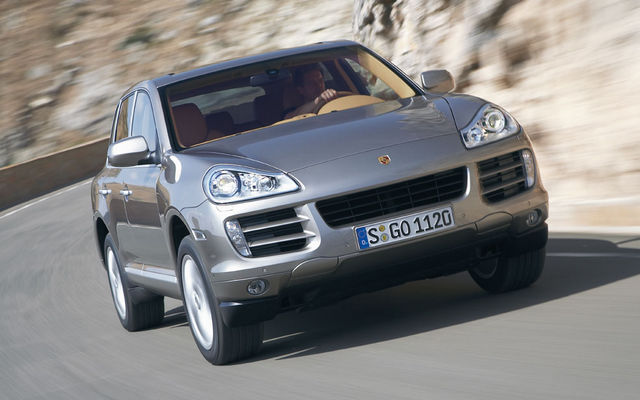
The Porsche Cayenne is a five seat mid-size luxury crossover manufactured by the German manufacturer Porsche since 2002, with North American sales beginning in 2003. Its platform was developed by Porsche and is shared with the Volkswagen Touareg and the Audi Q7. It is the first V8-engined vehicle built by Porsche since 1995, when the Porsche 928 was discontinued. Since 2008, all engines have featured direct injection technology. The Cayenne's chassis type numbers are as follows: Type 955 (2002–2006), Type 957 (2007–2010), and Type 958 (2011+).
The Porsche Cayenne is a five seat mid-size luxury crossover manufactured by the German manufacturer Porsche since 2002, with North American sales beginning in 2003. Its platform was developed by Porsche and is shared with the Volkswagen Touareg and the Audi Q7. It is the first V8-engined vehicle built by Porsche since 1995, when the Porsche 928 was discontinued. Since 2008, all engines have featured direct injection technology. The Cayenne's chassis type numbers are as follows: Type 955 (2002–2006), Type 957 (2007–2010), and Type 958 (2011+).
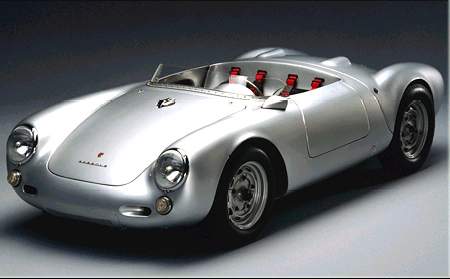
The RS Spyder (Type 9R6) is a racing car designed by Porsche to compete in Le Mans Prototype Class 2 (LMP2) racing. The car takes its name from the legendary 550 Spyder of the 1950s (combined with Porsche's common "Renn Sport" designation). The car marked Porsche's first return to the top level of sports prototype racing since the firm abandoned its Porsche 911 GT1 Le Mans prototype in 1999.
The RS Spyder made its debut in the final event of the 2005 American Le Mans Series (ALMS) at Laguna Seca winning its class. Since then the RS Spyder has won the ALMS LMP2 Championship in 2006, 2007 and 2008 and took class honours at Le Mans in 2008 and 2009. The outright victory at the 2008 12 Hours of Sebring was the first major victory for Porsche in endurance racing for five years and it was also the first time in 24 years that the non-premier class won the 12 Hours of Sebring overall
The RS Spyder was designed completely in-house by Porsche engineers. The chassis is a rigid carbon fibre monocoque with both the engine and transmission being integral stressed members. The 3.4 litre 90-degree V8 racing engine was designed from scratch as was the six-speed electro-pneumatic sequential gearbox. Braking is via six-piston caliper carbon-fibre brake mounted on suspension controlled by four-way, spring/damper units activated by pushrods with adjustable torsion-bar springs. The car has a dry weight of 825 kilograms (1,820 lb)in 2010 specification but was initially 750 kilograms (1,700 lb).
Since its introduction in 2005 the engine, which initially produced 478 horsepower (356 kW) has been developed and modified to meet the changing regulations of both the ALMS and the ACO. For 2008 the engine developed 503 horsepower (375 kW) using direct fuel injection and 440 horsepower (330 kW) in 2009-spec with air restrictor limitations.
The Porsche 911 GT3 is a high performance version of the Porsche 911 sports car. It is the latest in a long line of high performance models, beginning with the 1973 911 RS. The GT3, named after the FIA GT class for which it was intended, has a 3.6 litre naturally aspirated six-cylinder engine, based on the unit used in the Porsche 962 and Porsche 911 GT1 race cars.
A number of variations, designed for both road and track, have been added to the range since its launch in 1999. The current range (997) includes two road and three racing models. In addition to this, Porsche is currently developing a hybrid version that uses two electric motors and a kinetic energy recovery system, as initially developed for Formula One.
The GT3 has had a successful racing career in the one make national Porsche Carrera Cup series, the international Porsche Supercup, and also winning numerous championship and endurance races, including the GT class of the American Le Mans Series seven times, the 24 Hours of Daytona outright and the 24 Hours Nürburgring five times.
The engine of the GT3 sets it apart from most of the other 996 models although it shares the same basic 3.6 liter displacement of the standard 996 type so-called "integrated dry-sump" flat-six engine. Along with those of the GT2 and Turbo, it is actually based on the original air-cooled 911's versatile, true dry-sump crankcase, with an external oil tank. The original version of the GT3 had 360 PS (265 kW; 355 hp), compared to the 300 PS (221 kW; 296 hp) of the regular 996.
In GT3 configuration, this so called "split" crankcase (meaning the parting line of crankcase is on the crankshaft centerline) uses, instead of a fan and finned cylinders, separate water jackets added onto each side of the crankcase to cool banks of three cylinders with water pumped though a radiator. Thus, the GT3 engine is very similar to the completely water cooled 962 racing car's engine, which is also based on this same crankcase. The 962 differs, however, by using 6 individual cylinder heads while the GT1/GT3, like the air and water cooled Porsche 959, uses 2 cylinder heads, each covering a bank of 3 cylinders. The GT3 engine could thus also be thought of as similar to a 959 engine, but with water-cooled cylinders.
Up to early model year 2004 GT3 production, the basic casting used for the crankcase of the GT3 was exactly the same as the air-cooled engine and one could see the "964" casting number on the bottom of the crankcase and areas normally machined in the air-cooled application that are not machined for use in the water-cooled application. The crankcase casting was changed in mid-2004 to a "996" casting number crankcase to eliminate these external air-cooled remnants, but internally it is the same.
Because the 911 air-cooled crankcase uses the Porsche 356 engine to transmission mounting flange configuration, the GT3 uses a manual gearbox also of air-cooled 911 heritage. This gearbox has interchangeable gear ratios and is more durable making it more suitable for racing than the standard 911 type 996 gearbox.
At 450 hp (336 kW)[1], the 3.8 litre flat-six engine in the 2011 997 GT3 RS is the most powerful six cylinder naturally aspirated engine in any production car with a 118 hp (88 kW) per liter output.
The Porsche 911 GT3 is a high performance version of the Porsche 911 sports car. It is the latest in a long line of high performance models, beginning with the 1973 911 RS. The GT3, named after the FIA GT class for which it was intended, has a 3.6 litre naturally aspirated six-cylinder engine, based on the unit used in the Porsche 962 and Porsche 911 GT1 race cars.
A number of variations, designed for both road and track, have been added to the range since its launch in 1999. The current range (997) includes two road and three racing models. In addition to this, Porsche is currently developing a hybrid version that uses two electric motors and a kinetic energy recovery system, as initially developed for Formula One.
The GT3 has had a successful racing career in the one make national Porsche Carrera Cup series, the international Porsche Supercup, and also winning numerous championship and endurance races, including the GT class of the American Le Mans Series seven times, the 24 Hours of Daytona outright and the 24 Hours Nürburgring five times.
The engine of the GT3 sets it apart from most of the other 996 models although it shares the same basic 3.6 liter displacement of the standard 996 type so-called "integrated dry-sump" flat-six engine. Along with those of the GT2 and Turbo, it is actually based on the original air-cooled 911's versatile, true dry-sump crankcase, with an external oil tank. The original version of the GT3 had 360 PS (265 kW; 355 hp), compared to the 300 PS (221 kW; 296 hp) of the regular 996.
In GT3 configuration, this so called "split" crankcase (meaning the parting line of crankcase is on the crankshaft centerline) uses, instead of a fan and finned cylinders, separate water jackets added onto each side of the crankcase to cool banks of three cylinders with water pumped though a radiator. Thus, the GT3 engine is very similar to the completely water cooled 962 racing car's engine, which is also based on this same crankcase. The 962 differs, however, by using 6 individual cylinder heads while the GT1/GT3, like the air and water cooled Porsche 959, uses 2 cylinder heads, each covering a bank of 3 cylinders. The GT3 engine could thus also be thought of as similar to a 959 engine, but with water-cooled cylinders.
Up to early model year 2004 GT3 production, the basic casting used for the crankcase of the GT3 was exactly the same as the air-cooled engine and one could see the "964" casting number on the bottom of the crankcase and areas normally machined in the air-cooled application that are not machined for use in the water-cooled application. The crankcase casting was changed in mid-2004 to a "996" casting number crankcase to eliminate these external air-cooled remnants, but internally it is the same.
Because the 911 air-cooled crankcase uses the Porsche 356 engine to transmission mounting flange configuration, the GT3 uses a manual gearbox also of air-cooled 911 heritage. This gearbox has interchangeable gear ratios and is more durable making it more suitable for racing than the standard 911 type 996 gearbox.
At 450 hp (336 kW)[1], the 3.8 litre flat-six engine in the 2011 997 GT3 RS is the most powerful six cylinder naturally aspirated engine in any production car with a 118 hp (88 kW) per liter output.
The RS Spyder (Type 9R6) is a racing car designed by Porsche to compete in Le Mans Prototype Class 2 (LMP2) racing. The car takes its name from the legendary 550 Spyder of the 1950s (combined with Porsche's common "Renn Sport" designation). The car marked Porsche's first return to the top level of sports prototype racing since the firm abandoned its Porsche 911 GT1 Le Mans prototype in 1999.
The RS Spyder made its debut in the final event of the 2005 American Le Mans Series (ALMS) at Laguna Seca winning its class. Since then the RS Spyder has won the ALMS LMP2 Championship in 2006, 2007 and 2008 and took class honours at Le Mans in 2008 and 2009. The outright victory at the 2008 12 Hours of Sebring was the first major victory for Porsche in endurance racing for five years and it was also the first time in 24 years that the non-premier class won the 12 Hours of Sebring overall
The RS Spyder was designed completely in-house by Porsche engineers. The chassis is a rigid carbon fibre monocoque with both the engine and transmission being integral stressed members. The 3.4 litre 90-degree V8 racing engine was designed from scratch as was the six-speed electro-pneumatic sequential gearbox. Braking is via six-piston caliper carbon-fibre brake mounted on suspension controlled by four-way, spring/damper units activated by pushrods with adjustable torsion-bar springs. The car has a dry weight of 825 kilograms (1,820 lb)in 2010 specification but was initially 750 kilograms (1,700 lb).
Since its introduction in 2005 the engine, which initially produced 478 horsepower (356 kW) has been developed and modified to meet the changing regulations of both the ALMS and the ACO. For 2008 the engine developed 503 horsepower (375 kW) using direct fuel injection and 440 horsepower (330 kW) in 2009-spec with air restrictor limitations.